Behind the notes
Simply, the piano.
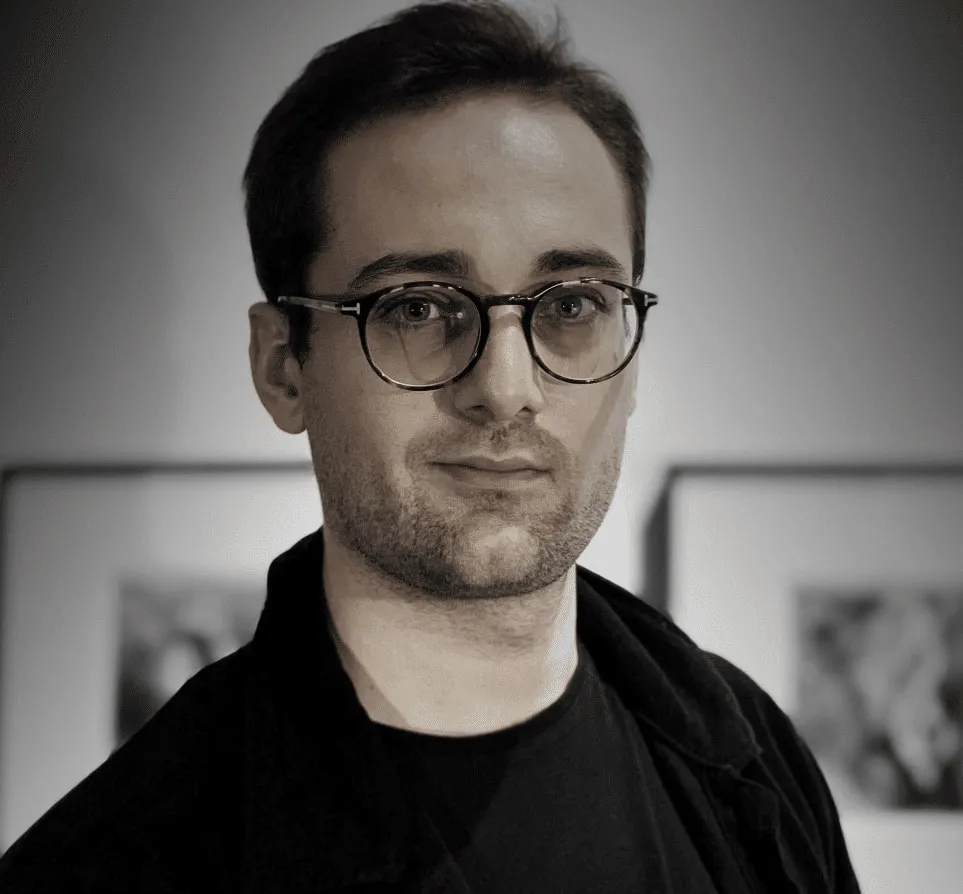 GIORGIO ARDENTE
 Giorgio Ardente is a French composer and pianist. His work at the piano draws on varied influences.
Biolesens began in spring 2020, while watching flocks of birds through a window. Their movements gave the notes a direction. This first released composition invites the listener to take time to look and listen.
The piano came into his life much earlier, through an old instrument his parents had inherited. He spent hours at the keyboard, exploring, then beginning to learn.
From six to eighteen, he took lessons with a teacher from the Metz conservatory. He remains grateful for that teaching and the music he discovered along the way.
The wish to release his compositions came from those close to him, who kept listening to the pieces he had shared with them. Biolesens was released in September 2020. A first piece, and a way of continuing that exchange.
Conversation · 2020
About the music.
01How did the piano come into your life?
It began with an old piano inherited by his parents. As a child, Giorgio spent a lot of time playing it. Later, friends and his wife encouraged him to share his compositions: they were still listening to pieces he had given them years before.
02Where did Biolesens begin?
During the first lockdown in spring 2020, Giorgio watched flocks of birds through his window. Their changes of direction became a starting point for the piece. The notes followed their movements, with a feeling of accompanying them. He suggests listening while watching nature.
03What music do you turn to?
He mentions Claude Debussy’s compositions, as well as Ronald Jenkees’s work on synthesizers. At the time of the interview, he was also listening to cellist Stjepan Hauser. Different influences, approached with the same curiosity.
04How did you learn to play?
From the age of six to eighteen, Giorgio took lessons with a teacher from the Metz conservatory, whom he remembers with gratitude. Among the pieces he studied, Chopin’s Fantaisie-Impromptu stands out as particularly demanding.
Based on the interview with Got Music Talent, 14 November 2020. Answers summarised from the original interview.